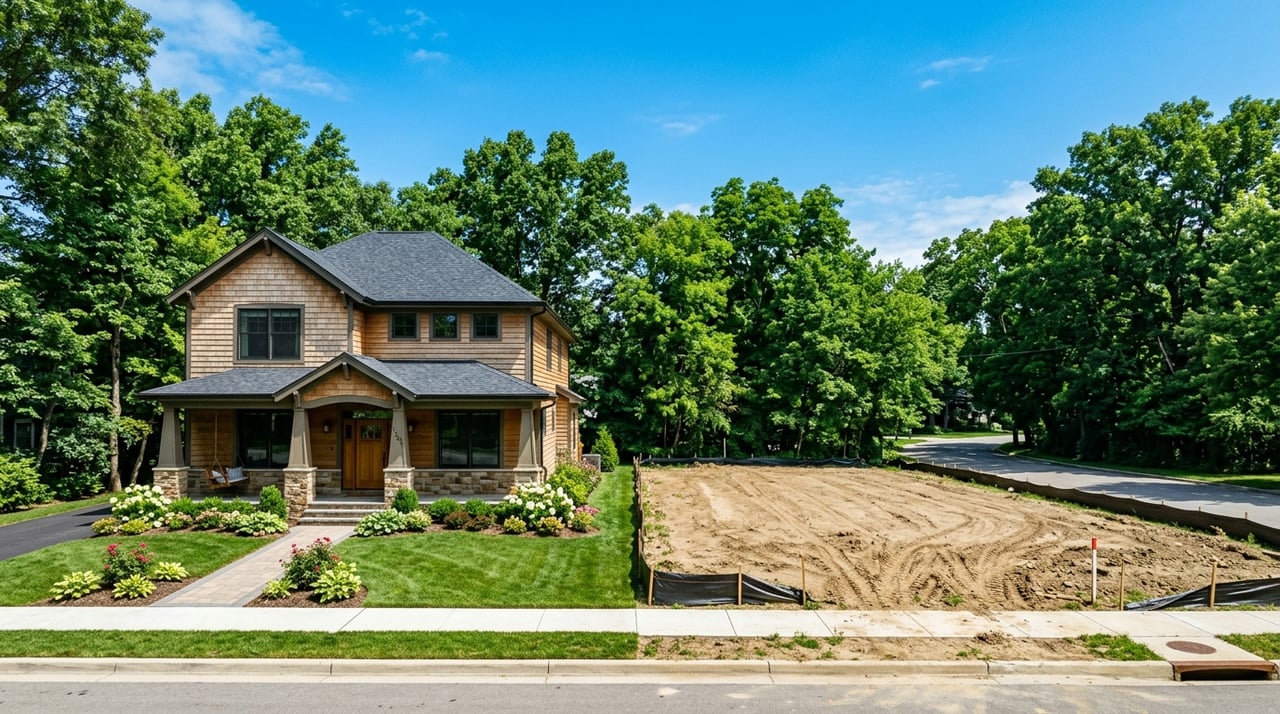
If you are thinking about buying land or building a home in Washougal, the biggest mistake is treating it like a normal home purchase. A great-looking parcel can still come with zoning limits, utility questions, permit hurdles, or added fees that change the numbers fast. The good news is that when you check feasibility first, you can move forward with much more confidence. Let’s dive in.
Why feasibility comes first
In Washougal, buying land or a new-construction home is often a feasibility-first decision. Before you focus on design ideas or price alone, you need to confirm what can actually be built, which rules apply, and what it will take to get from raw land to a finished home.
That matters even more right now because Washougal is updating its comprehensive plan for 2025 through 2045. Broad assumptions about an area are not enough. Parcel-level verification is the safer way to understand what you are really buying.
Check jurisdiction before anything else
One of the first questions to answer is whether the property is inside Washougal city limits or in unincorporated Clark County. That single detail affects zoning, permit review, utility questions, and which office oversees the project.
Within the city, Washougal’s Planning Division handles zoning, platting, environmental review, land use, and site plan review. For parcels outside city limits, Clark County development rules apply instead. If you are looking at multiple lots near the edge of town, this is one of the first items to verify.
Understand zoning and land division rules
Zoning tells you more than whether a home is allowed. It can also shape setbacks, density, access, and whether a parcel might be split in the future. If you are considering acreage because you hope to create additional lots later, you need to know the review path early.
In Washougal, a short subdivision of nine or fewer lots is a Type II administrative review. A subdivision of 10 or more lots is a Type III review with a public hearing. Both require a pre-application conference, which means future land division is not something to assume without checking the city’s process first.
The city also notes that land division review must confirm access, water, sewer, parks, and compliance with zoning standards and local plans. In practical terms, that means a parcel may look promising on paper but still need more work before it functions as a straightforward building site.
Watch for critical areas and shoreline limits
Some Washougal properties come with environmental constraints that can affect where and how you build. The city identifies several critical areas, including aquifer recharge areas, fish and wildlife habitat conservation areas, frequently flooded areas, geologically hazardous areas, and wetlands.
If a property is near a river or creek, shoreline rules may also apply. Washougal’s shoreline jurisdiction extends 200 feet landward from the water’s edge and includes associated wetlands. That can reduce the buildable area or add another layer of review.
For lots with shoreline, wetland, floodplain, or other critical-area issues, the city may also have added environmental review responsibilities, including SEPA and shoreline ordinance administration. This is one reason land purchases can take longer than resale transactions.
Utilities can shape the real cost
Utility availability is one of the biggest differences between an easy build and a complicated one. If the lot already has access to city water and sewer, your path may be more predictable. If not, you may need to explore private well and septic options, especially on rural edge properties.
The City of Washougal operates water, sewer, and stormwater utilities, and its sewer plan says sewer service reaches most of the developed land in Washougal. Stormwater and sanitary sewer are separate systems, so drainage and impervious-surface issues can matter on many sites.
For properties that need private systems, Clark County Public Health reviews new wells and on-site septic systems. County water staff also review new wells for adequacy and availability before building permits are issued. That means utility due diligence is not just a budget question. It is also a timing and approval question.
Budget for fees beyond land and construction
Many buyers focus on land price and building cost, then get surprised by development fees and connection charges. In Washougal, those costs can add up quickly and should be part of your planning from the start.
The city’s posted residential development fee sheet includes these example charges for a single-family home:
- Park impact fee: $6,847.85
- Transportation impact fee: $8,274.54
- Water connection charge for a 3/4-inch meter: $4,418
- Sewer connection charge for a 3/4-inch meter: $7,145
- Stormwater charge: $478
School impact fees can also vary by jurisdiction. The city’s fee sheet shows Washougal School District at $0 for a single-family home and Camas School District at $6,650. This is a good example of why parcel-specific research matters, even within the same general area.
You should also account for ongoing utility costs. Washougal’s 2026 utility rate sheet lists a 3/4-inch water base rate of $45.28 every two months, sewer at $84.70 every two months plus $6.19 per CCF, and stormwater at $37.11 every two months.
Know what the permit process may require
Permit timelines depend heavily on the property and the scope of the project. In Washougal, permit submittals may need diagrams, engineering calculations, plans, soil investigation reports, specifications, and other supporting data.
Depending on the project, plans can be reviewed by building, planning, engineering, or fire staff. If the lot has environmental or drainage complications, review can become more layered. That is why early conversations with the right offices and professionals can save time later.
Washougal also notes that an application expires if no permit is issued within 180 days. Once issued, a permit expires if work does not start within 180 days or if work is suspended or abandoned for 180 days. Inspection requests must be received by 5 p.m. the day before the requested inspection.
If the property is in unincorporated Clark County, the process may look different. The county’s LEAN review process for eligible new home construction on certain recorded lots targets a five-business-day turnaround for acceptance, review, and permit issuance, with a 5 to 10 business-day window depending on workload. But if a property still needs final plat approval and recording, county staff say the process can take several months.
Financing is different from a resale purchase
Financing for land and new construction often works differently from financing for an existing home. That difference can affect your down payment, rate, draw schedule, and closing strategy.
A construction loan is usually short-term, with funds disbursed in stages as work progresses. These loans often carry a higher interest rate than a longer-term mortgage. Depending on the structure, the loan may convert to permanent financing or require a new mortgage application later.
Vacant land financing also follows a different path than a standard resale mortgage. Documentation and underwriting can be different, especially if the land is unimproved or the build timeline is not immediate.
Financing can become more complex on acreage or nonstandard parcels. Conventional loans may be harder to get on properties with more than 10 acres, agricultural income, or appraisal challenges. In some rural parts of the county, USDA Rural Housing Service loan programs may also be relevant for buying, constructing, or repairing a home.
Protect yourself in a builder or land purchase
If you are buying a home that is not built yet, or buying land with plans to build, contract details matter. Builders may ask for an upfront builder deposit or earnest money, so you want the financing plan and contingency structure to be clear before you commit.
It is also worth remembering that you do not have to use a builder’s affiliated lender. Making an offer contingent on financing and on a satisfactory inspection can help protect your options while you work through the details.
With land, smart due diligence often includes confirming:
- Jurisdiction and zoning
- Utility availability
- Critical areas or shoreline constraints
- Access and drainage issues
- Permit path and likely timeline
- Development fees and connection charges
- Financing structure that fits the property
How a buyer’s agent can help
A land or build purchase has more moving parts than a typical resale. Instead of evaluating only the house and the price, you may need to coordinate lender questions, title and escrow, utility research, permit offices, and specialists such as surveyors, engineers, or septic and well professionals.
That is where having a calm, organized guide can make a real difference. A strong buyer’s agent helps you ask the right questions in the right order, so you can avoid expensive surprises and make decisions based on the full picture.
In Washougal, that step-by-step approach matters because deal economics are often shaped by zoning, utilities, permits, fees, and financing structure. Price matters, but feasibility usually matters first.
If you are weighing a lot purchase, a custom build, or a new-construction home in Washougal, having local guidance can help you sort through the details with more clarity. When you are ready for a thoughtful, client-first conversation, reach out to Anjali Remme to book a consultation.
FAQs
What should you verify before buying land in Washougal?
- You should confirm jurisdiction, zoning, utility availability, access, critical areas, permit path, development fees, and financing options before treating the purchase like a standard home deal.
Does it matter if the parcel is inside Washougal city limits?
- Yes. Properties inside city limits follow Washougal rules and review processes, while parcels in unincorporated Clark County follow county development rules.
Are utility costs separate from the land price in Washougal?
- Yes. Water, sewer, stormwater charges, connection fees, and impact fees can all add to your total cost beyond the purchase price and construction budget.
Can critical areas affect where you build in Washougal?
- Yes. Wetlands, flood areas, geologic hazards, aquifer recharge areas, habitat areas, and shoreline jurisdiction can reduce buildable area or trigger added review.
Is financing different for land and custom home construction?
- Yes. Construction loans are usually short-term, often fund work in stages, and may have different rates, documentation, and conversion terms than a standard mortgage.
Can acreage be harder to finance in Clark County?
- Yes. Financing may be more complicated on parcels with more than 10 acres, agricultural income, or appraisal challenges, so it helps to discuss loan options early.