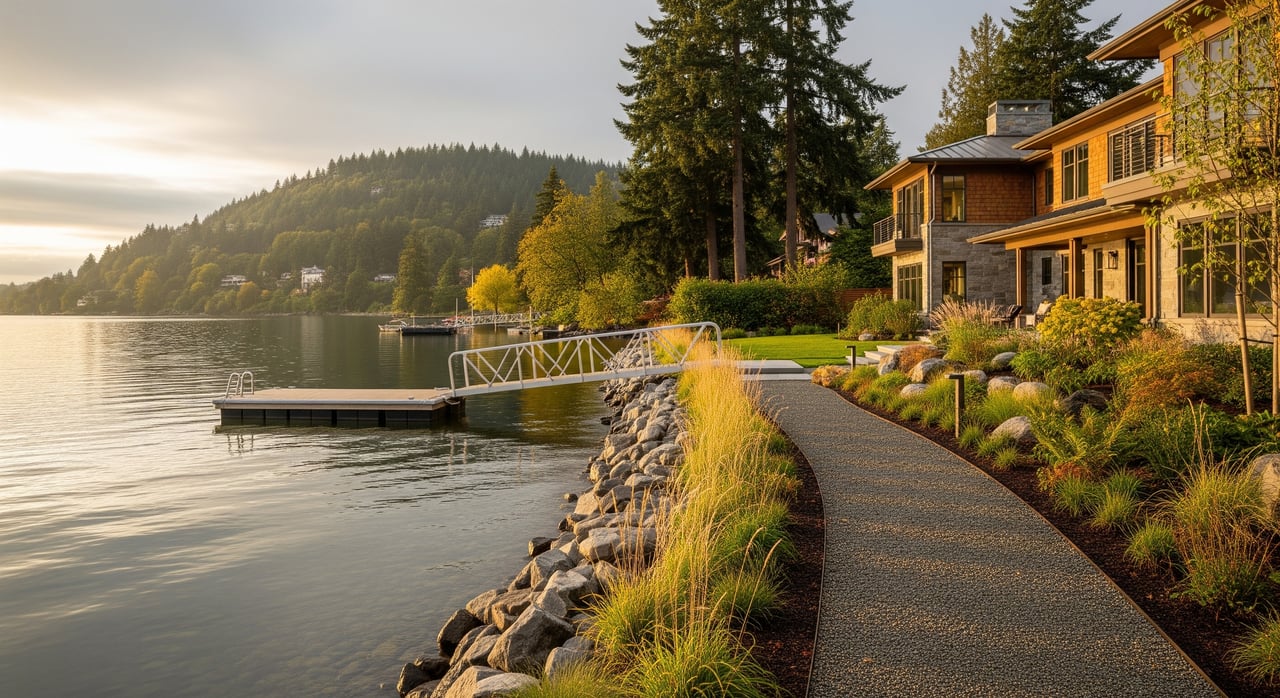
Thinking about a new dock, fresh stairs to the water, or reshaping the yard along Lake Sammamish? Shoreline rules can feel complex, and missing a step can stall your project. You want to enjoy the lake, protect your investment, and do things the right way. This guide gives you clear basics on the Ordinary High Water Mark, buffers, typical allowances, permits, and realistic timelines for Sammamish. Let’s dive in.
Who regulates Sammamish shorelines
Multiple agencies shape what you can do along the lake. Washington’s Shoreline Management Act sets the statewide framework, and the City of Sammamish implements it through a local Shoreline Master Program. The city’s Planning Department reviews shoreline permits and issues local building permits.
The Washington Department of Ecology provides oversight and definitions. If your work affects fish habitat or disturbs the bank or lakebed, the Washington Department of Fish and Wildlife typically requires a Hydraulic Project Approval. Some projects that involve fill or structures in navigable waters may also need federal permits from the U.S. Army Corps of Engineers. If your property is in unincorporated King County, the county’s Shoreline Master Program applies instead of the city’s.
The takeaway: start with the City of Sammamish Planning Department to identify which city, state, and federal permits your project will need.
OHWM sets your starting line
The Ordinary High Water Mark is the legal line that separates waterward from landward areas. It is located using signs on the ground like changes in vegetation, water stains, drift lines, exposed roots, or sediment changes. This line matters because it dictates which parts of your plan are considered waterward and which are landward.
For permits, an on‑site determination by a licensed surveyor or shoreline consultant is common. Online maps are helpful for context, but a field‑verified OHWM often becomes a required piece of your application.
Buffers and vegetation basics
Vegetated shoreline buffers protect bank stability, filter runoff, and support fish and wildlife. The City’s Shoreline Master Program assigns buffer widths and rules for how vegetation is managed. The size and allowed activities can vary based on your shoreline environment designation, slope, habitat, and whether the lot is single‑family.
Many programs allow small, low‑impact access paths or a narrow view corridor if they minimize removal of native plants. Selective pruning is often encouraged over removal. Fertilizers, herbicides, and pesticides are commonly restricted near the water to protect the lake.
What projects are often allowed
Docks and moorage
New docks and over‑water structures usually require shoreline review, and in‑water work typically needs a Hydraulic Project Approval. Standards often address dock size, area, height, materials, lighting, and location relative to neighbors and navigation. Some sites may favor a floating or pile‑supported design.
Shared community docks or a mooring buoy can be lower impact and may be easier to permit than a new private dock. Expect limits on boat lifts and conditions related to fish timing windows, mitigation plantings, or design tweaks that reduce habitat impacts.
Stairs and access paths
Narrow, permeable access paths and stairways from the top of bank to the water are commonly allowed with conditions. Width, materials, and how much vegetation you remove are closely reviewed. You will likely need mitigation plantings to offset any clearing within the buffer.
Lawns and landscaping
Expanding manicured lawn within the buffer is often limited or discouraged. Plans that retain or restore native vegetation usually review more smoothly and can reduce required mitigation. If removal is allowed, you may need to replant with native species and monitor for survival.
Shoreline armoring
Bulkheads and revetments are generally discouraged unless you can show an imminent risk to property that cannot be addressed in another way. If armoring is allowed, expect engineering reports and robust mitigation. Removing or softening existing armoring with a restoration plan is often supported.
Beach nourishment and grading
Placing fill waterward of the OHWM or reshaping the beach profile can trigger state and federal review. Many jurisdictions allow small, temporary beach grooming but not major regrading or fill without mitigation.
Repairs and maintenance
Routine repairs to lawfully built structures may qualify for a shoreline exemption. If you expand, relocate, or change materials in a way that alters function or size, it often triggers a full shoreline permit. Always confirm before you begin.
Permitting steps and timeline
Permit types you may need
- Shoreline Exemption for small, qualifying maintenance or repairs
- Shoreline Substantial Development Permit for most new work
- Shoreline Variance or Conditional Use if you cannot meet specific standards
- Building, clearing, and grading permits from the city
- WDFW Hydraulic Project Approval for in‑water or bank disturbance
- U.S. Army Corps permits for fill or structures in navigable waters
- SEPA review for projects with potential environmental impacts
Documents you will prepare
- Site plan with property lines, structures, topography, and OHWM location
- OHWM field determination by a licensed surveyor
- Project narrative describing methods, timing, and purpose
- Structural drawings for docks, stairs, or armoring
- Biological or habitat assessment if work occurs waterward or near sensitive habitat
- Mitigation and planting plan with native species and monitoring schedule
- Erosion and sediment control plan
- Photos of existing conditions and adjacent shoreline
- Evidence of coordination with WDFW and the Army Corps, if required
Step by step sequence
- Do preliminary research and speak with City of Sammamish Planning for guidance or a pre‑application meeting.
- Hire a surveyor to locate the OHWM and key site features.
- Finalize design and prepare consultant reports, including biological evaluation and mitigation plan as needed.
- Submit shoreline applications and apply for building or grading permits at the same time when possible.
- Coordinate with WDFW for an HPA and the Army Corps for federal permits, if they apply.
- Allow time for public notice, review, and possible comments.
- Receive permits with conditions and mitigation requirements.
- Build with required best practices and schedule inspections.
- Complete post‑construction monitoring and reporting if required.
Typical timelines
- Small exempt repairs: days to a few weeks after city confirmation
- Simple dock or minor landward landscaping: several weeks to a few months
- Complex in‑water work or projects needing HPAs, federal permits, or variances: several months to a year or more
Your timing depends on application completeness, site sensitivity, agency coordination, and whether SEPA or a public comment period is required.
Costs and contractor tips
Plan for surveyor fees, shoreline and biological consultant reports, engineering for docks or armoring, mitigation planting and monitoring, permit fees, and construction costs. Some projects require a mitigation bond or performance assurance. Hiring professionals with Sammamish and King County shoreline experience can reduce revisions and shorten review.
Avoid common pitfalls
- Treating online OHWM maps as permit‑ready data. A field determination is often required.
- Forgetting about HPA or federal permits when designing in‑water work.
- Clearing native buffer vegetation for a view or lawn expansion without a plan, which can trigger mitigation.
- Assuming repair work is exempt when it enlarges or moves a structure.
- Skipping early conversations with neighbors or your HOA on docks and access changes.
Quick homeowner checklist
- Contact City of Sammamish Planning for a pre‑application conversation.
- Commission an OHWM determination and site survey.
- Confirm your shoreline environment designation and buffer rules.
- Engage experienced shoreline professionals to prepare plans and studies.
- Apply for shoreline, building, and grading permits, plus HPA and federal permits if needed.
- Plan for mitigation plantings and monitoring requirements.
- Keep permits on site and follow approved methods during construction.
Ready to plan your move
If you are buying or selling near Lake Sammamish, your shoreline plans can affect value, timing, and negotiations. You deserve a calm, clear roadmap and a trusted advocate. Book a Consultation with Anjali Remme to talk strategy and next steps that fit your goals.
FAQs
Do I need a permit for a new dock on Lake Sammamish?
- Most new docks require a shoreline permit from the city and a Hydraulic Project Approval from WDFW, with design standards and mitigation often required.
What is the Ordinary High Water Mark and who determines it?
- The OHWM is the legal shoreline boundary set by field indicators, and a licensed surveyor or shoreline consultant typically determines it for permit applications.
Can I clear lawn or plantings within the shoreline buffer?
- Buffers are designed to stay vegetated; limited, low‑impact work may be allowed, but removal usually requires native replanting and mitigation under the SMP.
What is an HPA and when is it required in Sammamish?
- A Hydraulic Project Approval from WDFW is generally required for in‑water work or bank disturbance that can affect fish habitat, separate from city shoreline permits.
How long do shoreline permits take for Sammamish projects?
- Minor exempt repairs can take weeks, while simple projects run a few months; complex in‑water work with multiple agencies can take several months to a year or more.
Are bulkhead repairs exempt from shoreline permits?
- Routine maintenance may qualify for an exemption, but enlarging or changing the structure usually triggers a shoreline permit and added review.